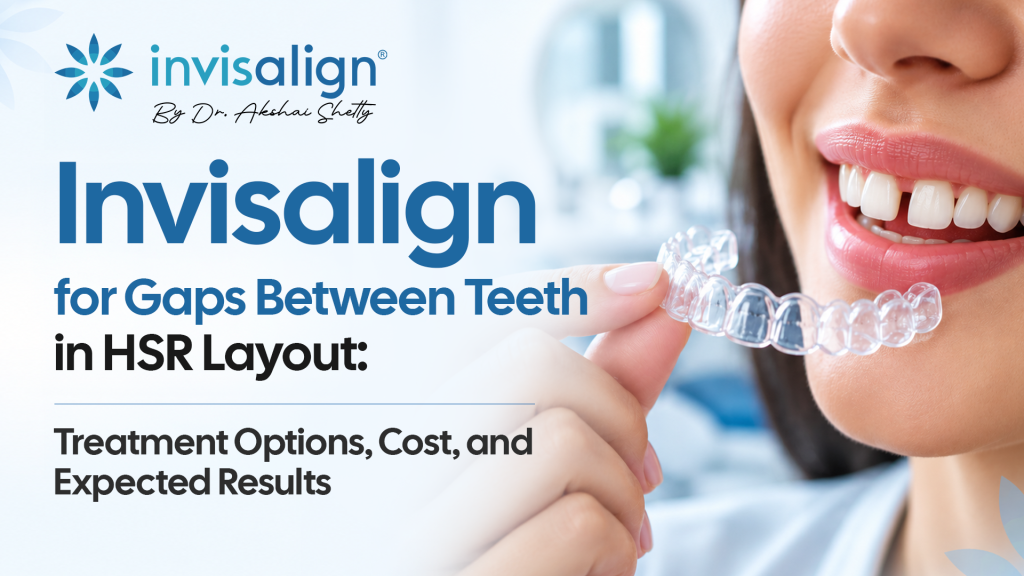
A small gap between your teeth can give your smile a unique character, but if you feel self-conscious about it, you may be looking for a safe and discreet way to close it. One of the most popular modern options is Invisalign or clear aligner treatment.
But can Invisalign actually close gap teeth? In many cases, yes. Clear aligners can gradually move teeth closer together and correct spacing, including certain types of diastema. However, every gap is different, and the ideal treatment depends on the reason behind the spacing, the position of your teeth, your bite, and your overall dental health.
If you are considering Invisalign for gap teeth in Bangalore, understanding how the treatment works can help you decide whether clear aligners may be suitable for your smile.
What Is Diastema?
A diastema is a visible space between two teeth. The term is commonly used for a gap between the upper front teeth, although spaces can occur between other teeth as well.
Some people naturally have gaps because of the size and shape of their teeth or jaw. In other cases, spacing can develop due to missing teeth, tooth movement, certain oral habits, gum-related changes, or the position of the tissue connecting the upper lip to the gums.
For many people, a gap is simply a cosmetic concern. However, if a gap has appeared recently or is gradually becoming larger, it is important to have it evaluated by a dental professional.
Can Invisalign Close Gap Teeth?
Yes, Invisalign can close many types of dental gaps.
Clear aligners work by applying gentle, controlled pressure to the teeth. Instead of moving all the teeth at once, each aligner is designed to make small adjustments. Over a series of aligners, the teeth can gradually move toward their planned positions.
For someone with a gap between the front teeth, the treatment plan may involve moving the teeth toward one another while also making sure that the surrounding teeth and bite remain properly aligned.
The important thing to remember is that Invisalign treatment is customized. There is no standard aligner sequence that works for everyone with gap teeth.
How Does Invisalign Close a Gap?
The process begins with a detailed dental assessment. Your dentist will examine your teeth, gums, bite and overall alignment. Depending on your situation, digital scans, photographs and dental X-rays may also be recommended.
Once your teeth have been assessed, a customized treatment plan can be created.
Your clear aligners are then designed to move your teeth gradually. Each set is generally worn according to the treatment schedule provided by your dentist. As you move from one set to the next, the position of your teeth slowly changes.
For a patient with diastema, the goal isn’t simply to make the visible gap disappear. The teeth need to be positioned correctly so that the final result looks natural and works comfortably with your bite.
What Causes Gap Teeth?
Before closing a gap, it is important to understand why it exists. Some common reasons include:
Natural Tooth Spacing
Some people naturally have extra space between their teeth because of the relationship between tooth size and jaw size. In these situations, orthodontic treatment may be an effective way to improve the appearance of the smile.
Missing Teeth
A missing tooth can leave a larger space in the dental arch. Depending on the situation, the treatment plan may involve closing the space or maintaining it for a future tooth replacement.
Gum and Supporting Tissue Changes
Changes in the gums and tissues supporting the teeth can sometimes cause teeth to move and spaces to develop. If spacing is changing, the underlying dental condition should be evaluated before orthodontic treatment begins.
Oral Habits
Certain childhood habits can contribute to changes in tooth position and spacing. Addressing the underlying habit or contributing factor may be important for achieving a stable result.
Tooth Shape and Size
Sometimes the teeth themselves are relatively small compared with the available space in the dental arch. In these cases, simply moving the teeth together may not always provide the ideal aesthetic proportions.
This is why an experienced dentist needs to assess the entire smile rather than focusing only on the visible gap.
Is Invisalign Good for Front Teeth Gaps?
For many patients, clear aligners can be an attractive option for correcting a gap between front teeth.
One of the biggest advantages is their discreet appearance. Since the aligners are transparent, they are generally much less noticeable than traditional metal braces.
They are also removable, which allows patients to take them out while eating and maintain their normal brushing and flossing routine.
For adults and professionals in Bangalore who may not want visible braces, this can make Invisalign for front teeth gaps an appealing choice.
However, clear aligners are not necessarily suitable for every orthodontic problem. Complex tooth movements or certain bite conditions may require alternative treatment. Your dentist can determine which approach is appropriate after evaluating your smile.
How Long Does It Take to Close a Gap With Invisalign?
The treatment duration varies from person to person.
A small gap involving only a few teeth may require a relatively straightforward treatment plan. A patient who has multiple spaces, crowding or bite problems may need a more comprehensive orthodontic plan.
Your treatment time can depend on:
- The size and location of the gap
- The number of teeth that need to move
- Your overall tooth alignment
- Your bite
- The complexity of the required tooth movements
- How consistently you wear your aligners
- Your individual response to treatment
Rather than relying on a fixed treatment period, it is better to have your teeth examined and receive an individualized estimate.
Will Invisalign Be Painful?
You may experience some pressure, tightness or mild discomfort when you start wearing a new set of aligners. This is generally associated with the gradual movement of the teeth.
The sensation is often temporary and may become less noticeable as you adjust to wearing the aligners.
If you experience significant or persistent discomfort, you should speak with your dentist rather than trying to continue treatment without professional guidance.
What Happens After the Gap Is Closed?
Closing the gap is only one part of successful orthodontic treatment.
Teeth can naturally shift over time, particularly after orthodontic treatment. This is why retainers after Invisalign are an important part of maintaining your result.
Your dentist will recommend an appropriate retention plan based on your treatment. Wearing your retainers as instructed can help keep your teeth in their new positions and reduce the chance of the gap reopening.
Patients who want long-lasting results should therefore think of retention as an essential part of the overall treatment rather than an optional final step.
Invisalign vs Braces for Gap Teeth
Both clear aligners and traditional braces can be used to treat tooth spacing. The right option depends on the individual case.
Traditional braces use brackets and wires to gradually move teeth. They can be highly effective for a wide range of orthodontic problems.
Clear aligners, on the other hand, offer a more discreet treatment experience. They can be removed when eating and brushing, and many patients appreciate their minimal appearance.
If your primary concern is a straightforward gap between teeth, clear aligners may be worth discussing with your dentist. If your case involves more complicated alignment or bite issues, your dentist may recommend another approach.
Can a Large Gap Be Closed With Clear Aligners?
A larger gap does not automatically mean that clear aligners are unsuitable.
However, the larger or more complicated the space, the more important it becomes to identify its cause. If the gap is associated with a missing tooth, gum condition, unusual tooth position or another underlying issue, simply moving the teeth together may not be the best solution.
Your treatment plan should therefore be based on the condition of your entire mouth rather than the size of the visible space alone.
Invisalign for Gap Teeth in Bangalore
If you are searching for Invisalign in Bangalore or clear aligners for gap teeth, choosing the right dental professional is an important part of the process.
Dr. Akshay Shetty can assess your teeth and discuss whether clear aligners may be appropriate for correcting your dental spacing. A personalized consultation can help determine the cause of the gap, evaluate your bite and create a treatment approach suited to your smile.
Instead of choosing treatment solely because it is popular, it is better to understand what is causing your gap and what type of tooth movement is required.
Benefits of Clear Aligners for Gap Teeth
For suitable patients, clear aligners can provide several advantages:
Discreet treatment: Clear aligners are designed to be less noticeable than traditional braces.
Removable: You can remove the aligners for meals and your regular oral hygiene routine.
Customized: Your treatment is planned around the specific position and movement of your teeth.
Comfortable design: Without traditional brackets and wires, many patients find aligners convenient for everyday life.
Easy to incorporate into your routine: With proper compliance, aligner treatment can fit into work, social activities and daily routines.
Are Clear Aligners the Right Choice for You?
If you have a gap between your teeth and want to improve your smile, clear aligners may be an effective option. But the best treatment cannot be determined simply by looking at the size of the gap.
A dental consultation is important to understand:
- Why the gap developed
- Whether your gums and teeth are healthy
- Whether your bite needs correction
- How much tooth movement is required
- Whether clear aligners can achieve your desired result
- Whether additional cosmetic or restorative treatment may be beneficial
- What type of retainer you may need after treatment
Final Thoughts
So, can Invisalign close diastema? In many cases, yes. Clear aligners can gradually move appropriately positioned teeth together and correct various forms of dental spacing.
For people looking for gap teeth treatment in Bangalore, Invisalign offers a discreet and convenient alternative to conventional braces in suitable cases. However, every patient’s teeth are different, so professional evaluation is essential before starting treatment.
Book your appointment with Dr. Akshay Shetty today to explore Invisalign treatment for gap teeth — Call Now: 080-2550-4231.