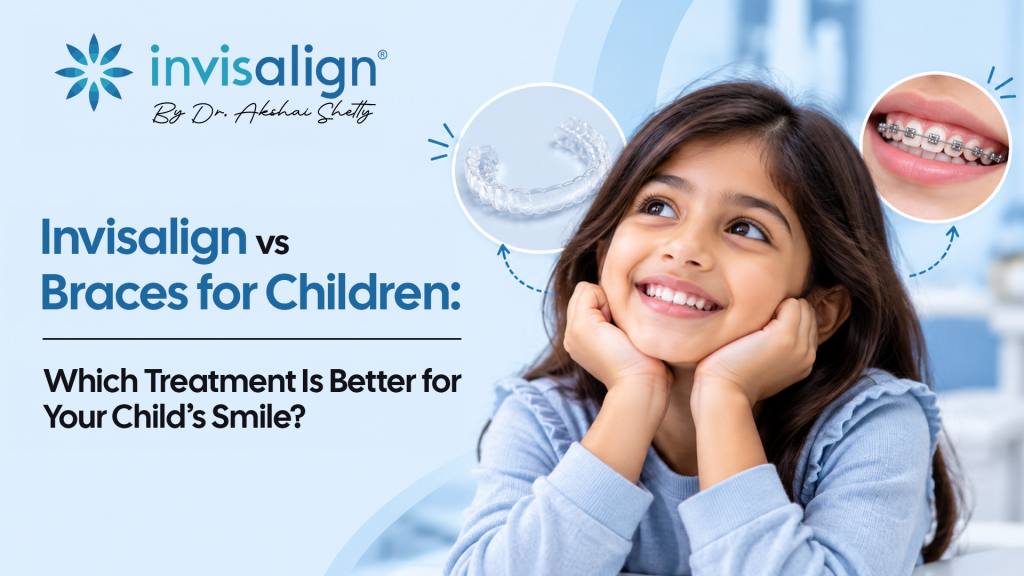
A healthy, well-aligned smile can support your child’s oral health, confidence, and overall development. When teeth are crowded, crooked, spaced apart, or the bite is not properly aligned, orthodontic treatment may be recommended. Today, parents have several options, with traditional braces and Invisalign clear aligners being two commonly discussed choices.
But which option is better for your child? The answer depends on your child’s age, dental development, orthodontic needs, lifestyle, and ability to follow treatment instructions. A professional evaluation is the best way to determine the most suitable approach.
If you are considering orthodontic treatment for your child, Dr. Akshay Shetty can assess the teeth and bite and explain the available treatment options based on your child’s individual needs.
What Is Invisalign?
Invisalign is an orthodontic treatment that uses a series of clear, removable aligners to gradually move teeth into their planned positions. The aligners are custom-made for each patient based on digital scans or impressions.
Unlike traditional braces, Invisalign does not use metal brackets and wires. The transparent design makes the aligners less noticeable when worn.
For children and teenagers who are suitable candidates, clear aligners can help address several orthodontic concerns, including certain cases of:
- Crooked teeth
- Crowded teeth
- Gaps between teeth
- Some bite problems
- Mild to moderate tooth alignment issues
However, not every child is automatically a candidate for Invisalign. An orthodontic assessment is important before choosing this treatment.
What Are Traditional Braces?
Traditional braces use brackets attached to the teeth and an orthodontic wire that applies controlled pressure to gradually move the teeth. The wire is adjusted periodically during orthodontic appointments.
Braces have been used successfully for many years and can treat a wide range of orthodontic problems. They may be particularly useful when a child requires more complex tooth movement or bite correction.
Modern braces are available in different designs, including smaller metal brackets and tooth-coloured options.
Invisalign vs. Braces for Children
Both Invisalign and braces can improve tooth alignment, but they work differently. Understanding their differences can help parents discuss the right option with their child’s dental professional.
1. Appearance
One of the biggest differences is appearance.
Traditional metal braces are clearly visible because they use brackets and wires. Some children may not mind this, while others may feel self-conscious about wearing braces.
Invisalign aligners are transparent and generally less noticeable. This can be appealing to older children and teenagers who prefer a more discreet treatment option.
2. Removability
Invisalign aligners can be removed when eating, drinking, brushing, and flossing. This allows children to continue eating most of their usual foods.
Braces remain attached to the teeth throughout treatment. Children wearing braces may need to avoid or limit hard, sticky, and chewy foods that could damage the brackets or wires.
The removable nature of Invisalign can make daily routines easier, but it also means the child must remember to wear the aligners as instructed.
3. Oral Hygiene
Maintaining good oral hygiene is important during any orthodontic treatment.
With traditional braces, food particles can become trapped around brackets and wires. Children need to brush carefully around these areas and clean between their teeth.
Invisalign aligners can be removed for brushing and flossing, allowing children to maintain their normal oral hygiene routine more easily.
However, aligners also need to be cleaned regularly, and children should follow the instructions provided by their dental professional.
4. Comfort
Both treatments can cause temporary discomfort because the teeth are gradually being moved.
Traditional braces may sometimes cause irritation from brackets or wires, particularly after adjustments. Invisalign aligners are made from smooth material and generally do not have metal brackets or wires.
Some initial pressure or mild soreness can still occur with clear aligners as the teeth begin moving.
5. Food Choices
Food restrictions are another important consideration.
Children with traditional braces may be advised to avoid foods such as:
- Hard candies
- Popcorn
- Sticky sweets
- Chewy foods
- Ice
- Hard nuts
These foods can potentially damage orthodontic components.
With Invisalign, aligners are removed during meals, so there are generally fewer food restrictions. Children should remove the aligners before eating unless their dental professional provides different instructions.
6. Treatment Responsibility
This is one of the most important differences for parents to consider.
Braces remain fixed to the teeth, so children cannot remove them. Invisalign requires the child to wear the aligners consistently according to the treatment plan.
If a child frequently removes the aligners, forgets to wear them, or loses them, treatment may not progress as planned.
Therefore, Invisalign may be better suited to children who are responsible enough to follow their orthodontic instructions.
Is Invisalign Suitable for Every Child?
No. Invisalign is not automatically the right treatment for every child.
The suitability of clear aligners depends on factors such as:
- The child’s age
- Stage of dental development
- Type and severity of orthodontic problem
- Bite relationship
- Tooth movement required
- Ability to follow aligner-wearing instructions
- Overall oral health
Younger children may have different orthodontic needs because their jaws and permanent teeth are still developing. In some cases, early orthodontic intervention may be recommended before considering comprehensive alignment treatment.
A dental professional can evaluate the child’s teeth, jaw development, bite, and overall oral health before recommending a treatment approach.
Are Braces Better for Complex Cases?
Traditional braces can provide precise control over tooth movement and have a long history of treating different types of orthodontic problems.
For some children with significant crowding, complex bite issues, or movements that require greater control, braces may be recommended.
However, advances in clear-aligner technology mean that Invisalign can also be used for many orthodontic concerns. The appropriate option depends on the individual case rather than simply choosing one treatment for every child.
Invisalign vs. Braces: Which Is More Affordable?
The cost of orthodontic treatment varies depending on several factors. These may include:
- Type of treatment
- Complexity of the case
- Duration of treatment
- Number of appointments
- Additional orthodontic procedures
- Treatment provider and location
Because every child’s treatment plan is different, it is better to receive a personalised cost estimate after an examination rather than relying on a general price.
Parents should also consider the overall treatment experience, follow-up requirements, and the child’s ability to follow the treatment plan when comparing options.
How Long Does Children’s Orthodontic Treatment Take?
Treatment duration varies from one child to another.
The time required depends on the severity of the alignment problem, the type of treatment selected, the child’s age and dental development, and how well the treatment instructions are followed.
Children using Invisalign need to wear their aligners as directed and attend scheduled check-ups. Children with braces also need regular appointments for adjustments and monitoring.
Following the dental professional’s instructions can help keep treatment progressing as planned.
How to Choose Between Invisalign and Braces
Parents should not choose an orthodontic treatment based only on appearance or popularity. A professional examination should come first.
During the consultation, Dr. Akshay Shetty can evaluate your child’s teeth and bite and discuss whether Invisalign, traditional braces, or another orthodontic approach may be appropriate.
Consider these questions:
- What type of orthodontic problem does my child have?
- Are all permanent teeth developed enough for the proposed treatment?
- Can my child responsibly wear and care for removable aligners?
- Would fixed braces provide better control for the required tooth movements?
- How long is the expected treatment?
- What will the total treatment cost include?
- How often will follow-up appointments be required?
Having these questions answered can help parents make an informed decision based on their child’s individual needs.
Benefits of Early Orthodontic Evaluation
An early dental or orthodontic evaluation can help identify developing alignment or bite concerns. In some children, early intervention may help guide developing teeth and jaws or determine the appropriate timing for future treatment.
Not every child will need immediate orthodontic treatment. Sometimes, monitoring growth and dental development is the most appropriate approach.
Regular dental visits are also important for maintaining healthy teeth and gums throughout orthodontic treatment.
Caring for Your Child’s Smile During Orthodontic Treatment
Regardless of whether your child receives Invisalign or braces, good oral hygiene remains essential.
Encourage your child to:
- Brush twice a day with fluoride toothpaste.
- Clean carefully around orthodontic appliances.
- Floss or use appropriate interdental cleaning methods.
- Attend regular dental check-ups.
- Follow all orthodontic instructions.
- Avoid habits that may damage braces or aligners.
- Keep Invisalign aligners clean and store them safely when removed.
A healthy mouth provides a better foundation for orthodontic treatment and long-term oral health.
Final Thoughts
There is no single orthodontic treatment that is best for every child. Invisalign and traditional braces both have advantages, and the appropriate option depends on the child’s dental condition, age, treatment goals, and ability to follow the treatment plan.
Invisalign may appeal to children and teenagers who want a discreet and removable option, while traditional braces can be suitable for a wide range of orthodontic problems and remain attached throughout treatment.
If you are unsure which option is suitable for your child, schedule an orthodontic consultation with Dr. Akshay Shetty. A detailed assessment can help determine the treatment approach that best fits your child’s individual smile and dental needs.
Frequently Asked Questions
1. Is Invisalign safe for children?
Yes, Invisalign can be suitable for children who meet the treatment requirements and can follow their aligner-wearing instructions.
2. Are braces better than Invisalign for children?
Not necessarily. The better option depends on the child’s dental condition, treatment needs, age, and ability to follow instructions.
3. Can children eat normally with Invisalign?
Invisalign aligners are generally removed before eating, so children can usually eat without the food restrictions associated with traditional braces.
4. How long does Invisalign treatment take for children?
Treatment time varies depending on the child’s orthodontic needs and how consistently the aligners are worn.
5. When should my child have an orthodontic consultation?
An orthodontic evaluation can help identify developing bite or alignment concerns and determine whether treatment is needed and when it should begin.
Explore Invisalign and braces options for children. Book your online appointment with Dr. Akshai Shetty at 080-2550-4231.