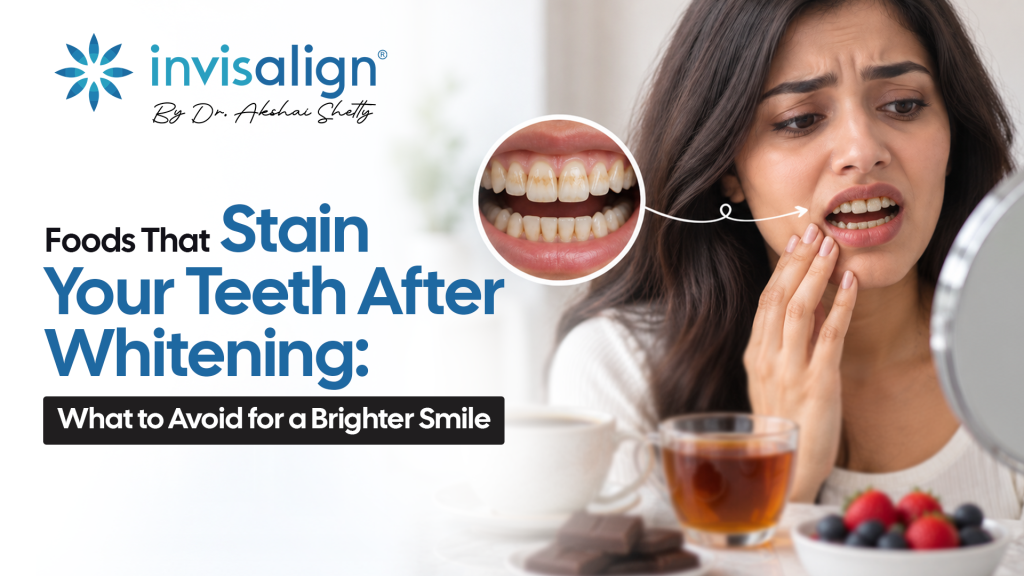
Teeth whitening is a popular cosmetic dental treatment that can help remove surface stains and make your smile look brighter. After whitening, many people want to maintain their results for as long as possible. One of the easiest ways to do this is by being careful about what you eat and drink, especially during the first few days after treatment.
Some foods and beverages contain strong pigments, acids, or ingredients that can contribute to tooth staining. Knowing what to avoid after teeth whitening can help you protect your brighter smile and keep your teeth looking fresh.
Why Can Foods Stain Teeth After Whitening?
After a professional whitening treatment, your teeth may be more sensitive for a short period. The outer enamel can also be more likely to pick up stains from highly pigmented foods and drinks.
Dark-colored foods and beverages contain pigments called chromogens. These pigments can attach to the tooth surface and gradually cause discoloration. Acidic foods can also soften the enamel temporarily, making it easier for stains to develop.
This does not mean you need to avoid these foods forever. However, limiting them immediately after whitening can help maintain your results.
1. Coffee
Coffee is one of the most common causes of tooth staining. It contains dark pigments that can gradually discolor teeth.
If you regularly drink coffee, try reducing your intake for the first few days after whitening. When you return to drinking coffee, consider drinking it in moderation and rinsing your mouth with water afterward.
2. Tea
Black tea and other dark teas can stain teeth because they contain tannins and pigments. In some cases, tea may contribute to staining more quickly than you expect.
If you enjoy tea, choose lighter-colored options when possible and rinse your mouth with water after drinking.
3. Red Wine
Red wine contains strong pigments and tannins that can stain teeth. Its acidity can also affect the enamel.
It is best to avoid red wine immediately after whitening. If you drink it later, rinsing your mouth with water can help reduce the amount of staining material left on your teeth.
4. Dark-Colored Soft Drinks
Cola and other dark-colored soft drinks may contribute to tooth discoloration. They are also acidic, which can affect tooth enamel.
Instead of dark soft drinks, choose water or other non-staining beverages, particularly during the first few days after whitening.
5. Berries
Berries such as blueberries, blackberries, and dark-colored cherries are nutritious but contain strong natural pigments.
These pigments can contribute to surface staining, especially when teeth are more vulnerable immediately after whitening. You do not necessarily need to avoid berries permanently, but limiting them for a short period can help protect your results.
6. Tomato-Based Foods
Tomato sauce, pasta sauce, ketchup, and other tomato-based foods have strong colors and are also acidic.
If you have recently whitened your teeth, consider choosing lighter-colored foods for a few days. When eating tomato-based foods, rinsing your mouth with water afterward can help.
7. Soy Sauce
Soy sauce is dark in color and can contribute to surface staining. It is commonly used in many Asian dishes, so it can be easy to consume without realizing how much staining potential it has.
Try using lighter sauces or reducing soy sauce intake during the immediate post-whitening period.
8. Curry and Other Dark Spices
Many curries contain turmeric and other strongly colored spices. Turmeric, in particular, has a bright yellow-orange pigment that can contribute to staining.
You can enjoy your favorite foods again after the recommended post-whitening period, but limiting highly pigmented spices immediately after treatment can help maintain a brighter smile.
9. Balsamic Vinegar
Balsamic vinegar has a dark color and acidic nature. Frequent exposure may contribute to surface discoloration.
If you have recently undergone teeth whitening, consider lighter dressings such as olive oil-based dressings for a short period.
10. Dark Chocolate
Dark chocolate contains natural pigments and can contribute to staining when consumed frequently.
You can enjoy chocolate in moderation, but choosing lighter-colored varieties during the first few days after whitening may be a better option.
What Can You Eat After Teeth Whitening?
After whitening, you can choose foods that are lighter in color and less likely to stain your teeth. Some suitable options include:
- White rice
- Plain yogurt
- Milk
- Chicken
- Fish
- Eggs
- Cauliflower
- Potatoes
- Bananas
- Apples
- Oatmeal
- Plain pasta
- Cheese
These foods are often included in what is commonly called a “white diet.” The idea is to temporarily choose lighter-colored foods while avoiding highly pigmented options.
Be Careful With Acidic Foods
Staining is not the only concern after whitening. Acidic foods and drinks can increase tooth sensitivity and may affect enamel.
Common acidic items include:
- Citrus fruits
- Lemon-based drinks
- Orange juice
- Soft drinks
- Vinegar-based foods
- Certain sports drinks
If you consume acidic foods or drinks, avoid brushing your teeth immediately afterward. Rinse with water and give your mouth some time before brushing.
Drink Plenty of Water
Water is one of the simplest ways to help maintain your whitening results.
Drinking water after meals and beverages can help wash away food particles and pigments from the mouth. It also helps keep your mouth hydrated and supports saliva production.
Whenever possible, choose water instead of dark-colored or sugary beverages.
Maintain Good Oral Hygiene
Food choices are important, but good oral hygiene is equally important after teeth whitening.
Brush your teeth twice a day using a soft-bristled toothbrush and fluoride toothpaste. Floss daily to remove food particles between your teeth.
Avoid brushing too aggressively, especially if your teeth are sensitive after whitening. Gentle brushing is usually enough to keep your teeth clean.
Avoid Smoking and Tobacco
Smoking and tobacco products can cause significant tooth staining. If you have invested in professional teeth whitening, avoiding tobacco can help protect your results.
Tobacco can also negatively affect overall oral health and increase the risk of gum problems.
How Long Should You Avoid Staining Foods?
The exact recommendation can vary depending on the whitening treatment and your dentist’s instructions. Many dental professionals recommend being especially careful with strongly colored foods and drinks for the first 24 to 48 hours.
Some people may be advised to follow these precautions for several days.
Your dentist can provide personalized instructions based on your treatment and the condition of your teeth.
What If Your Teeth Become Sensitive?
Temporary sensitivity is common after some teeth whitening treatments. You may notice sensitivity when consuming very hot, cold, sweet, or acidic foods and drinks.
If sensitivity occurs:
- Choose foods at a comfortable temperature.
- Avoid very acidic foods temporarily.
- Use a soft toothbrush.
- Follow your dentist’s recommendations.
- Avoid whitening products unless your dentist recommends them.
If sensitivity is severe, persistent, or unusual, contact your dentist for advice.
How to Keep Your Teeth White for Longer
Professional whitening can brighten your smile, but daily habits play an important role in maintaining the results.
Try these simple habits:
1.Brush twice daily.
2.Floss every day.
3.Drink plenty of water.
4.Limit coffee, tea, and red wine.
5.Avoid smoking and tobacco.
6. Rinse your mouth after strongly colored foods.
7.Visit your dentist for regular checkups.
8.Follow professional whitening maintenance recommendations.
Remember that natural teeth can gradually develop some staining over time. This is normal and does not necessarily mean your whitening treatment has failed.
Professional Teeth Whitening and Dental Guidance
If you are considering teeth whitening or want to maintain your whitening results, professional guidance can help you choose the right approach. A dentist can assess your teeth, gums, existing restorations, and the type of discoloration before recommending treatment.
Dr. Akshay Shetty can provide professional dental guidance and help patients understand suitable teeth whitening options and aftercare for maintaining a brighter smile.
Final Thoughts
Teeth whitening can give you a brighter and more confident smile, but maintaining the results requires some simple care. Coffee, tea, red wine, dark soft drinks, berries, tomato sauces, curry, soy sauce, and other highly pigmented foods can contribute to staining.
You do not have to avoid these foods forever. Being careful during the first few days after whitening, drinking plenty of water, maintaining good oral hygiene, and following your dentist’s instructions can help your smile stay brighter for longer.
If you are planning professional teeth whitening, speak with your dentist about the best treatment and aftercare plan for your smile.
Frequently Asked Questions
1. Can I drink coffee after teeth whitening?
It is better to avoid coffee for the first few days after whitening. Ask your dentist when it is safe to resume regular coffee consumption.
2. Can I eat curry after teeth whitening?
It is best to limit dark-colored curries and strongly pigmented spices for a short period after whitening.
3. Can I eat fruits after teeth whitening?
Yes. Choose lighter-colored fruits and avoid highly pigmented fruits such as blueberries and blackberries immediately after whitening.
4. How long should I avoid staining foods?
Many dentists recommend avoiding strongly colored foods and drinks for at least 24–48 hours, but follow the specific instructions given by your dentist.
5. How can I keep my teeth white after whitening?
Brush twice daily, floss regularly, drink water, limit staining foods and drinks, avoid tobacco, and follow your dentist’s whitening aftercare advice.
For expert teeth whitening advice, consult Dr. Akshai Shetty at Bangalore Invisalign Doctor. Call 080-2550-4231 to book your appointment.