A straight, healthy smile can improve both your appearance and confidence. Today, Invisalign clear aligners have become a popular choice for people who want to straighten their teeth without traditional metal braces. However, many people still have questions and misunderstandings about how Invisalign works.
Some believe clear aligners are only suitable for minor tooth corrections, while others think they are uncomfortable, difficult to maintain, or not effective for adults. In reality, Invisalign can be an effective and convenient orthodontic treatment for many patients when planned and monitored by an experienced dental professional.
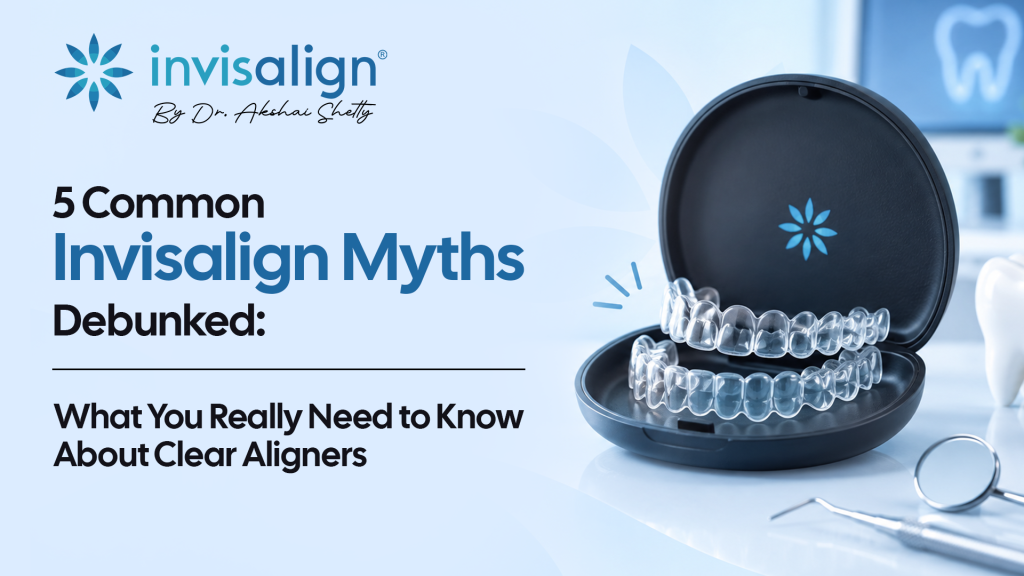
In this blog, we will debunk 5 common Invisalign myths and explain what you really need to know about clear aligner treatment.
What Is Invisalign?
Invisalign is a modern orthodontic treatment that uses a series of custom-made, clear aligners to gradually move teeth into their desired positions. The aligners are designed using digital scans and treatment planning.
Unlike traditional braces, Invisalign aligners are removable and have no metal brackets or wires. Patients usually wear their aligners for most of the day and change to a new set according to their dentist’s treatment plan.
An experienced dentist such as Dr. Akshay Shetty can evaluate your teeth, bite, and overall oral health to determine whether clear aligner treatment is suitable for you.
Myth 1: Invisalign Is Only for Minor Teeth Problems
One common misconception is that Invisalign can only correct very small gaps or slightly crooked teeth.
The Reality
Modern clear aligner treatment can address a variety of orthodontic concerns. Depending on the patient’s individual condition, Invisalign may help with:
- Crowded teeth
- Gaps between teeth
- Crooked teeth
- Certain bite problems
- Mild to moderate alignment issues
- Relapse after previous orthodontic treatment
However, every patient’s teeth and bite are different. Some complex cases may require other orthodontic approaches.
This is why a professional consultation is important. Dr. Akshay Shetty can assess your dental condition and recommend the most appropriate treatment based on your individual needs.
Myth 2: Invisalign Is Pain-Free
Because Invisalign does not use metal brackets and wires, some people assume that the treatment does not cause any discomfort.
The Reality
Invisalign is generally comfortable, but you may experience mild pressure or temporary discomfort when starting a new set of aligners.
This pressure is actually a normal part of the tooth-moving process. The aligners apply controlled forces to gradually guide your teeth into their planned positions.
The discomfort is usually temporary and tends to reduce as you become accustomed to wearing the aligners.
One benefit of Invisalign is that there are no metal wires or brackets that can rub against the inside of your cheeks or lips.
Myth 3: Invisalign Is Only for Adults
Many people think clear aligners are designed only for working professionals and adults.
The Reality
Clear aligner treatment can be suitable for teenagers as well as adults, depending on their dental development and orthodontic needs.
Adults often choose Invisalign because the aligners are transparent and can fit easily into a professional lifestyle. Teenagers may also prefer clear aligners because they are less noticeable than traditional braces.
However, the right treatment depends on factors such as tooth development, oral health, bite, and treatment goals.
A dental consultation with Dr. Akshay Shetty can help determine whether Invisalign is appropriate for your age and dental condition.
Myth 4: You Can Eat Anything While Wearing Invisalign
Another common misunderstanding is that because Invisalign aligners are removable, you can eat normally while wearing them.
The Reality
One of the major advantages of Invisalign is that you can remove your aligners while eating. This means you generally do not have the same food restrictions associated with fixed braces.
You can remove the aligners before meals, eat your food, and then clean your teeth before putting the aligners back in.
However, you should avoid eating while wearing the aligners unless specifically advised by your dental professional. Hot drinks and certain foods can affect the aligners.
Maintaining good oral hygiene is also important because food particles left on your teeth can increase the risk of plaque buildup and tooth decay.
Myth 5: Invisalign Does Not Require Regular Dental Visits
Some people believe that because Invisalign aligners are removable and digitally planned, they do not need regular dental appointments.
The Reality
Regular dental check-ups are an important part of successful Invisalign treatment.
During follow-up appointments, your dentist can monitor tooth movement and check whether your treatment is progressing as planned. Your dentist may also make adjustments to your treatment when necessary.
The exact frequency of appointments depends on your individual treatment plan.
Following your dentist’s instructions and attending scheduled appointments can help you achieve better treatment results.
Why Do People Choose Invisalign?
There are several reasons why patients choose clear aligners over traditional braces.
Nearly Invisible Appearance
The clear design makes Invisalign much less noticeable than conventional metal braces. This can be especially appealing to adults and professionals.
Removable Design
You can remove your aligners when eating, brushing, and flossing. This makes maintaining your regular oral hygiene routine easier.
Comfortable Treatment
Without metal brackets and wires, Invisalign can provide a more comfortable orthodontic experience for many patients.
Easy Oral Hygiene
Because the aligners are removable, you can brush and floss your teeth normally. Good oral hygiene remains essential throughout treatment.
Personalized Treatment
Invisalign treatment is planned according to your individual dental structure and treatment goals. Digital technology can help dentists visualize tooth movement and plan the treatment process.
How to Get the Best Results From Invisalign
Choosing Invisalign is only one part of achieving a successful result. Your cooperation during treatment is equally important.
Here are some simple tips:
Wear your aligners as recommended: Consistent wear is important for keeping your treatment on track.
Keep your aligners clean: Clean your aligners regularly according to your dentist’s instructions.
Maintain good oral hygiene: Brush and floss regularly to keep your teeth and gums healthy.
Remove aligners before eating: Unless your dentist gives you different instructions, remove them before meals.
Attend follow-up appointments: Regular dental visits allow your dentist to monitor your progress.
Follow your dentist’s instructions: Every Invisalign treatment plan is different, so follow the instructions provided by your dental professional.
Is Invisalign Right for You?
Invisalign can be a convenient and discreet option for people who want to improve the alignment of their teeth. However, it is not automatically the right treatment for everyone.
Your dentist needs to examine your teeth, gums, bite, and overall oral health before recommending clear aligners.
If you are considering Invisalign, consulting an experienced dental professional such as Dr. Akshay Shetty can help you understand your treatment options and what you can realistically expect from clear aligner treatment.
Final Thoughts
Invisalign has changed the way many people approach orthodontic treatment. Although there are several myths surrounding clear aligners, modern Invisalign treatment can offer a discreet, removable, and convenient way to improve tooth alignment for suitable patients.
From adults and professionals to eligible teenagers, many people can benefit from clear aligners. The key is getting a proper dental evaluation and following your treatment plan carefully.
If you are thinking about straightening your teeth, speak with Dr. Akshay Shetty to understand whether Invisalign is suitable for your smile and dental needs.
Frequently Asked Questions
1. Is Invisalign better than traditional braces?
Invisalign and traditional braces both have their advantages. Invisalign offers a clear, removable option, while traditional braces may be recommended for certain complex orthodontic cases. Your dentist can recommend the most suitable option for you.
2. How long does Invisalign treatment take?
Treatment time varies depending on the complexity of your case. Some patients may complete treatment in a shorter period, while others may need longer treatment. Your dentist can provide an estimated timeline after evaluating your teeth.
3. Can I eat while wearing Invisalign?
It is generally recommended to remove Invisalign aligners before eating. After eating, clean your teeth and put the aligners back in as instructed by your dentist.
4. Is Invisalign suitable for adults?
Yes. Invisalign is a popular option for adults who want to improve their smile without noticeable metal braces. Suitability depends on your individual dental condition.
5. Does Invisalign hurt?
You may experience mild pressure or temporary discomfort when starting a new aligner. This is generally normal because the aligners are gradually moving your teeth.
6. How often should I visit my dentist during Invisalign treatment?
Your dentist will recommend follow-up appointments based on your individual treatment plan. Regular visits help monitor your progress and make sure treatment is moving in the planned direction.
Learn the truth about Invisalign myths and clear aligners with expert guidance from Dr. Akshai Shetty. Call 080-2550-4231 for an appointment.