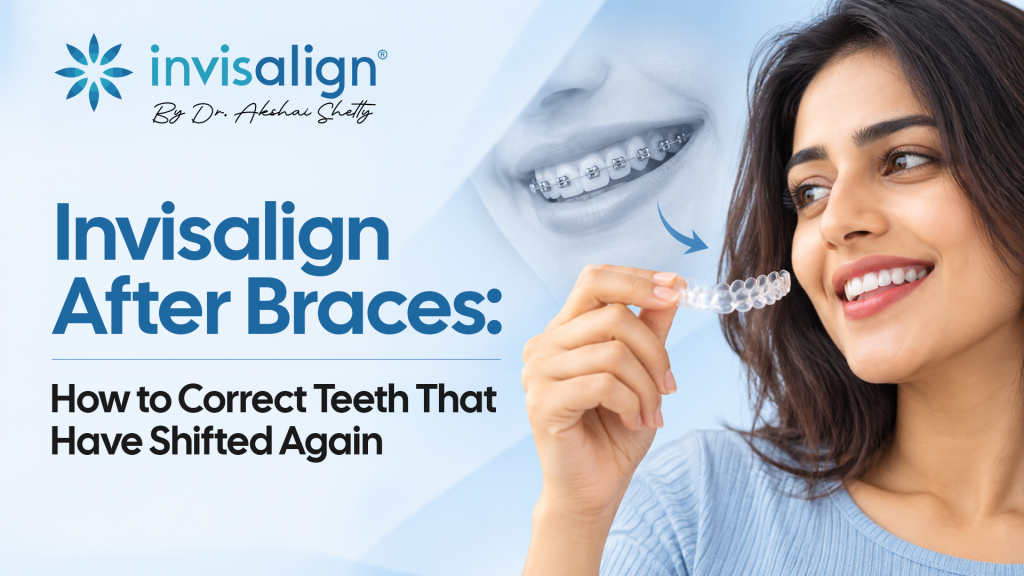
Have your teeth started shifting after braces? You are not alone. Many people experience some degree of teeth movement after completing orthodontic treatment. Even after months or years of wearing traditional braces, teeth can gradually move away from their corrected positions. This can affect your smile, bite alignment, and confidence.
The good news is that Invisalign after braces can help correct teeth that have shifted again. Invisalign uses a series of clear, removable aligners designed to move teeth gradually into their desired positions. For people who have experienced orthodontic relapse, clear aligners can offer a discreet and convenient way to improve their smiles without wearing metal braces again.
In this blog, we will explore why teeth shift after braces, how Invisalign can help, and what you should know before beginning retreatment with Dr. Akshay Shetty.
Why Do Teeth Shift After Braces?
Orthodontic treatment moves teeth into better positions, but the surrounding bone, gums, and supporting tissues need time to adapt to these changes. Teeth also have a natural tendency to move throughout life.
When retainers are not worn as recommended, teeth may gradually return toward their previous positions. This is commonly known as orthodontic relapse.
Here are some common reasons why teeth shift after braces:
1. Not Wearing Retainers Regularly
Retainers are essential for maintaining the results achieved with braces. If you stop wearing your retainer or forget to use it consistently, your teeth may gradually move out of alignment.
2. Natural Age-Related Changes
As people grow older, their teeth and jaws can undergo changes. Even individuals who had perfectly straight teeth after braces may develop crowding, particularly in the lower front teeth.
3. Wisdom Teeth and Other Dental Changes
Wisdom teeth can contribute to changes in the mouth, although they are not considered the sole or primary cause of most orthodontic relapse. Other factors, including changes in the bite and natural tooth movement, can also affect alignment.
4. Original Alignment Issues
Some patients have complex bite problems or significant crowding that require long-term retention after treatment. Without appropriate follow-up and retainer use, some of these alignment changes may return.
5. Habits That Affect Tooth Position
Certain oral habits, tongue pressure, and persistent forces on the teeth may contribute to changes in alignment in some individuals.
Understanding why your teeth have shifted is an important first step toward choosing the right orthodontic retreatment.
Can Invisalign Fix Teeth That Have Shifted After Braces?
Yes, Invisalign for teeth shifting after braces can be an effective option for many patients. The suitability of treatment depends on the amount of tooth movement, your bite, gum health, and overall dental condition.
Invisalign uses custom-made, transparent plastic aligners that apply controlled pressure to specific teeth. Each set is designed to move the teeth gradually, following a treatment plan created by your dental professional.
Unlike traditional braces, Invisalign aligners are removable and have no metal brackets or wires. This makes them an appealing option for adults and teenagers who want to correct minor or moderate orthodontic relapse discreetly.
Invisalign may help address:
- Mild to moderate teeth crowding after braces
- Small gaps that have reopened
- Slightly rotated teeth
- Minor spacing issues
- Certain alignment changes affecting the front teeth
- Selected bite problems, depending on their complexity
However, not every orthodontic relapse can be treated with Invisalign alone. More complex tooth movements or significant bite discrepancies may require other orthodontic approaches.
A professional orthodontic assessment can help determine whether clear aligners are suitable for your needs.
How Does Invisalign Treatment After Braces Work?
If you are considering Invisalign retreatment, the process generally involves several steps.
Step 1: Dental Consultation and Assessment
The first step is a detailed dental examination. Your dentist will evaluate your current tooth alignment, bite, gum health, and the extent of movement since your previous braces treatment.
Digital scans, photographs, and X-rays may be recommended when clinically necessary. These records help your dental professional understand your current condition and plan appropriate treatment.
Dr. Akshay Shetty can be mentioned as your consultation point of contact for discussing available treatment options and determining the next steps based on your individual dental needs.
Step 2: Creating a Personalised Treatment Plan
Once your teeth have been assessed, a suitable treatment plan can be developed. Digital treatment planning allows the dental professional to map the intended tooth movements and estimate how many aligners may be required.
The treatment plan depends on factors such as the severity of relapse, the number of teeth involved, and whether bite correction is needed.
Step 3: Wearing Custom Clear Aligners
You will receive a series of custom-made Invisalign aligners. Each set is typically worn for approximately one to two weeks, depending on your dentist’s instructions and the specific treatment plan.
For effective results, aligners generally need to be worn for around 20–22 hours per day, removing them for meals, drinks other than water, and oral hygiene.
Consistent wear is essential because irregular use can delay progress and affect treatment outcomes.
Step 4: Monitoring Your Progress
Regular dental appointments allow your dentist to monitor tooth movement and check whether your treatment is progressing as planned.
Some cases may require attachments, small tooth-coloured features bonded to selected teeth to help aligners achieve particular movements. Refinement aligners may also be needed toward the end of treatment.
Step 5: Wearing Retainers After Invisalign
Once your teeth reach their planned positions, retention becomes the next important step.
Your dentist will recommend a suitable retainer and explain how often to wear it. Long-term retention is usually necessary because teeth can continue to shift throughout life.
Remember, Invisalign corrects tooth alignment, while retainers help maintain the results.
What Are the Benefits of Invisalign After Braces?
For patients who want to straighten their teeth again without repeating the traditional braces experience, Invisalign offers several potential benefits.
Nearly Invisible Appearance
Clear aligners are discreet, making them suitable for working professionals, college students, and adults who prefer a less noticeable orthodontic treatment.
Comfortable and Removable Design
Invisalign aligners can be removed for eating, brushing, and flossing. This allows you to maintain your usual oral hygiene routine more easily than with fixed braces.
Easier Oral Hygiene
Because aligners are removable, you can brush and floss your teeth normally. Maintaining good oral hygiene is particularly important during orthodontic retreatment.
A Convenient Option for Minor Relapse
If your teeth have shifted only slightly, treatment may be less involved than your original orthodontic treatment. However, the actual duration depends on your individual case, and not every patient will qualify for a short treatment plan.
Digital Treatment Planning
Digital scans and treatment-planning tools can help visualise the proposed tooth movements. Your dentist can explain the expected changes and discuss realistic treatment goals before you begin.
How Long Does Invisalign Take to Fix Shifted Teeth?
The duration of Invisalign treatment after braces varies from person to person.
Some patients with mild crowding or limited spacing issues may complete treatment within a few months. More complicated cases can take a year or longer, depending on the required tooth movements and the patient’s response to treatment.
Factors affecting treatment time include:
- The severity of orthodontic relapse
- The number of teeth that need correction
- Whether bite alignment must also be addressed
- How consistently the aligners are worn
- The need for additional aligners or refinements
Your dentist can provide a more realistic estimate after examining your teeth and developing a personalised treatment plan.
Is Invisalign Better Than Getting Braces Again?
Both Invisalign and traditional braces can correct teeth that have shifted after orthodontic treatment. The right option depends on your dental needs, treatment complexity, lifestyle, and preferences.
Invisalign may be suitable for patients who want a discreet treatment option for selected alignment problems. Traditional braces may be preferable for certain complex tooth movements or cases requiring more comprehensive bite correction.
The decision should not be based on appearance alone. Your dental professional should evaluate your bite, gum health, and the type of tooth movement required before recommending treatment.
If you have previously worn braces, a second orthodontic consultation can help you understand whether clear aligners or fixed braces would provide the most predictable outcome.
How Can You Prevent Teeth from Shifting Again?
After completing Invisalign or any other orthodontic treatment, protecting your results is essential.
Follow these practical steps to reduce the risk of another relapse:
- Wear your retainer as instructed: Follow your dentist’s recommended wearing schedule and do not discontinue use without professional advice.
- Attend regular dental check-ups: Routine visits can help identify alignment changes early.
- Keep your teeth and gums healthy: Brush twice daily, floss regularly, and maintain professional dental care.
- Replace damaged retainers: A cracked, distorted, or poorly fitting retainer should be evaluated by your dentist.
- Seek advice if your retainer feels tight: Do not force a retainer that no longer fits properly, particularly if it causes pain. Arrange a dental assessment instead.
Consistency with retention is one of the most important factors in maintaining your orthodontic results.
When Should You Consult Dr. Akshay Shetty?
If you notice gaps reopening, crowding developing, or your teeth looking different from how they appeared immediately after braces, consider arranging a dental consultation.
Dr. Akshay Shetty can be referenced in your dental care content as the professional to consult about evaluating tooth movement and discussing suitable treatment options. Any specific qualifications, clinic details, or Invisalign expertise should be verified before publication.
Early assessment can help identify the extent of tooth movement and determine whether Invisalign, another orthodontic treatment, or a retainer adjustment is appropriate.
Avoid starting treatment with old aligners or forcing a retainer onto shifted teeth without professional guidance. The wrong approach may cause discomfort or place unwanted forces on your teeth.
Conclusion
Teeth shifting after braces can be frustrating, especially when you have already invested time and effort in achieving a straight smile. Fortunately, Invisalign after braces offers a discreet treatment option for many people experiencing orthodontic relapse.
From correcting mild crowding to closing small gaps, clear aligners can help restore tooth alignment when the case is suitable. However, successful retreatment depends on proper diagnosis, a personalised treatment plan, consistent aligner wear, and long-term retainer use.
If your teeth have shifted again, consult Dr. Akshay Shetty to discuss your concerns and explore the available orthodontic options for your smile.
With the right professional guidance and a commitment to retention, you can work toward a straighter smile and help maintain your results for years to come.
Correct shifted teeth with Invisalign at Dr. Akshai Shetty’s. Call 080-2550-4231 for an appointment.